It's a god-awful small affair
To the girl with the mousy hair
But her mummy is yelling, "No!"
And her daddy has told her to go
But her friend is nowhere to be seen
Now she walks through her sunken dream
To the seat with the clearest view
And she's hooked to the silver screen
– Life on Mars
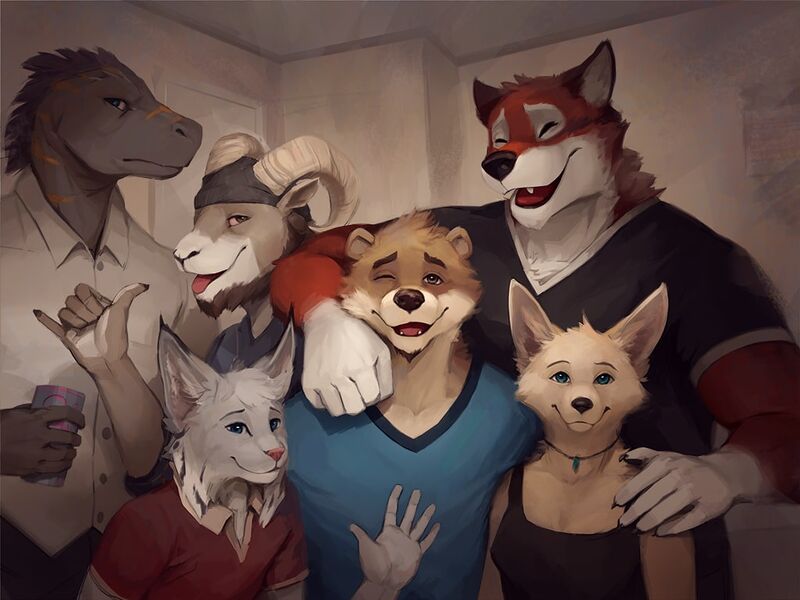
ECHO'S narrative structure is something entirely inverted of what you would encounter in the genre. Even from the beginning, the most tropic sections are inverted. Instead of going to a college from a dead-beat town, you return back to where it began. In fact, there aren’t many new areas (to the characters) in Echo at all. You are not given the promises of a new future, but are rather forced to deal introspectively with the past. This is primarily why I call Echo a post-apocalyptic novel. The driving force of Echo is so ruinous, undetachable, that it feels as if the world had already ended, and what we are dealing with now are but the shadowed consequences of that fateful day. This plays out in the characterization of Echo – each character being extraordinarily tropic and 1 dimensional, save for one. Carl , the stoner; TJ, the puritan; Leo, the father, and Jenna, the mother. Then there is Flynn.
Flynn is possibly one of the strongest characters I have seen written in any recently read digital media . Flynn is the refutation. I do not want to cover all of the details of Flynn’s route precisely (a mistake I have made before; the draft became long and rambling due to the sheer quantity of material to cover), so I would recommend experiencing it for yourself to explore the smaller details. It’s a route nothing short of beautiful, and by far the coup de grace of Echo.
Flynn’s route
hates you. Well, not you now, exactly, I suppose; but Flynn’s route hates who you can be. From the onset, Flynn’s route is a scathing, biting critique of not only the visual novel but of the virtual novel protagonist and, even further, fantasy. Flynn’s route is the only route that actively warns you of going into it – the beginning of the critique of virtual novel player’s savior complexes. Flynn’s route has only one ending, and that ending is guaranteed to be canonical (in some timeline). Flynn’s route has the most amount of decisions – a thing any virtual novel fan would be ecstatic about, normally – but has the least agency.
Flynn is The Hermit. His route, unlike any other, is about finding truth at any cost. The tragedy being, of course, that he cannot accept it. In the beginning, Flynn seems to be an apathetic asshole, but by the end you realize he is the emotional core of the Echo cost – or, at least was, until everyone forgot about Sydney. There’s a universally relatable dilemma in Flynn’s route – do we move on from the past, never to find answers, only to potentially run aground again; or are we to seek the truth, fly that closer to the sun, until we are asunder? Flynn, after all, feels a vengeance for being left behind. Everyone else, moving on (only Carl staying, but even he wants to change), while Flynn is left to rot in this dying dust hellhole as a resigned sexual degenerate . The people he thought he knew, morphing into things unrecognizable as years pass from the accident. It is no wonder then what Flynn does; he burns up in his pursuit of the truth; but only because he blinked .
In the end, Flynn dies, flesh stripped from his bone, stuck in the flames of a forgotten cursed mine. He dies because he is so stuck in his fantasies of what could’ve been – no, what he deserved – that he is unable to see it is killing him. He wishes to death for another world, one that could never, ever exist in any timeline; one where Sydney lives, and one, maybe, where he could truly. Where everyone else has moved on – quite literally, as they have walked past the mine, only returning too late, like they always have – Flynn is stuck in his own hell, deforming, deranging, from the uncontrollable cyclic motions of bloodied accident after bloodied accident. Flynn gripped the wild rope of fate too firmly, and now must suffer the burn.
How is Flynn left? He is left as an unrecognizable monster, unable to see, hear, feel, and, perhaps eventually, think. He is stuck across time, forever making decisions that he has no part in making, forever ruining further lives and changing the natural course of things, forced to be an observer in a world he so died to have a part in. Does this not sound familiar to us, players?
Part of the pain of Flynn’s route is how fated it is. Even if you try your hardest to save him, Samuel Ayers sets the course back to doomed destruction. You grow to hate Samuel Ayers. Who is he, after all, to control such things he has no right to control? Yet you think this, yourself a player who has stripped all agency and personality you can already. Take Chase for example. Chase is, notably, a shell of a person; this is to commentate on the state of virtual novel protagonists, who serve more as blank projections to the wistful fantasies of the players rather than actual characters. Only in Flynn’s route do we see the real Chase, and when we do we are beholden to a sort of childlike tabula rosa , completely separate from the same person we were controlling beforehand. This obsession over control and agency is one of the many-pronged attacks on fantasy that Echo so laboriously commentates over .
It is here where I feel a need to, however difficult it may be, clarify the furry fandom. The furry fandom is an uncontrollable, wild beast. Beneath this, one may find the beating heart of fantasy powering the engine. It is, after all, how we silly people dress up as silly dog people, no matter how shunted we may be by others. It is, after all, how we imagine ourselves in endless art landscapes – like virtual novels. It is, after all, how we create fictional personas – fursonas – for ourselves to inhabit and make merry. Every vaporous attitude, ever-shifting social construct, or random witticism can be explained in diagnosis by fantasy. Quickshot love? An overindulgence. Apoliticism and apathetic? A fear of the death of fantasy. Unceasing muckraking and dramafarming? A fantasy-fueled social disconnect. It is for so much that fantasy has enabled us, yet for so much that it continues to pain us.
We imagine silly things that simply cannot be; I mean, get a grip – Dog people? – Really? – and the pain of this disconnect haunts us. It is no coincidence that the furry fandom is made up of the estranged; of the outcast; of the far-away, forlorn, strange, weird, or soft-spoken hardly-heard. Under the guise of silly dog people we attempt to fantasize worlds where we ourselves are different, finding home and recompense in those amazing, beautiful, full people sharing this similar malaise. It is no wonder the home of the furry is the gone northwest pines, intemporal; It is no wonder the home of the furry are Sci-Fi faraway galaxies, riding cross endless frontiers; It is no wonder the home of the furry is the internet, with so many strands, and so much potential for identity; and it, then, is no wonder the home of the furry is the virtual novel, the coalescence of this je ne sai quais that plagues us where we forever dream of electric sheep. We want to be different. This is the angst that steers Flynn’s route; a man so obsessed with his fantasy of the past’s potential future that he is paralyzed and numb from fear. The fear that fantasia will burn under the focus of the boring world brought to light; and that we will too, forced to agonizingly reconcile with normality, killed by living.